Sandstone Paving Slabs and Patio Stone
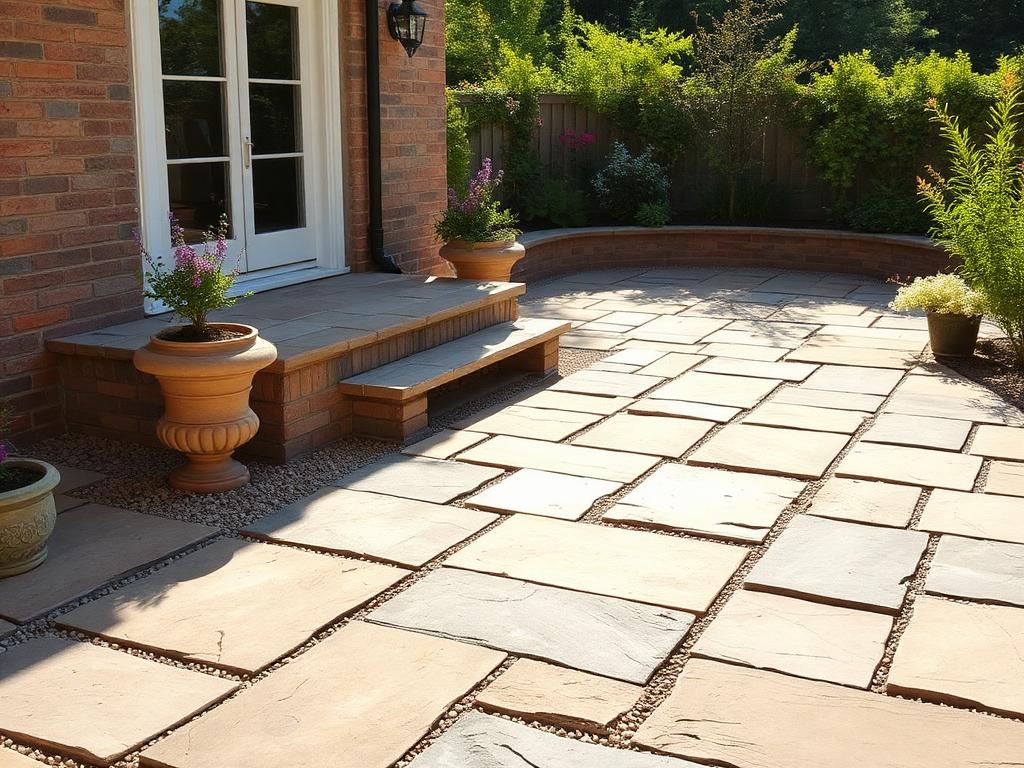
Sandstone paving is the volume patio product in most markets. Buyers care about calibration, thickness tolerance and breakage on arrival far more than they care about the quarry name.
- Calibrated thickness for consistent laying
- Riven, sawn and tumbled finishes
- Standard project packs and single sizes
- Timber-crated and edge-protected for shipping
Available sizes
- 600x600 mm
- 600x900 mm
- 290x290 mm
- Project pack mixes
- 22 mm / 30 mm thick
Applications
- Patios and garden terraces
- Garden paths and walkways
- Commercial and public landscaping
- Pool surrounds
- Steps, copings and edging
Typical buyers
- Builders merchants
- Landscape yards
- Paving distributors
- Contractors
Calibrated versus hand-cut
Calibrated slabs are machine-ground to an even thickness, which speeds up laying and reduces bedding mortar. Hand-cut is cheaper per square metre but the installer absorbs the extra time. Most merchants selling to trade stock calibrated only.
Finishes and where each sells
Riven is the traditional textured surface and remains the volume seller. Sawn and honed reads contemporary and commands a higher price. Tumbled edges suit period properties and cottage schemes.
Project packs and coverage
A standard project pack mixes several sizes to lay a random pattern, typically covering 15.3 to 18.6 square metres. Single-size packs suit linear paths and commercial work where a repeating pattern is specified.
Colour variation is expected, but must be controlled
Natural sandstone varies by definition. What is not acceptable is a pack where half the slabs come from a different seam. We blend across the pallet so the variation reads as natural across a laid patio rather than as two distinct batches.
Packing to survive the container
Slabs are stacked on edge in timber crates with corner protection and strapping. Breakage on arrival is the single biggest cost in imported paving, and it is almost always a packing failure rather than a stone failure.
Sealing and maintenance advice for your customers
Sandstone is porous and benefits from an impregnating sealer after laying, especially in areas with heavy organic staining. Passing that advice to the end customer reduces complaints about staining and algae in the first two seasons.
Wholesale, bulk and export details
This product is supplied on the same commercial basis as the rest of our range: quantity confirmed against container payload, packing quoted separately and documentation prepared to your broker's brief.
Questions buyers ask about sandstone paving
- What thickness sandstone paving do you supply?
- 22 mm and 30 mm calibrated are standard; hand-cut is available in nominal 22–30 mm.
- What is a project pack?
- A mix of sizes laid in a random pattern, typically covering 15.3 to 18.6 square metres per pack.
- Does sandstone need sealing?
- It is porous, so an impregnating sealer after laying is recommended, particularly where staining is likely.
- How is paving packed for export?
- Stacked on edge in timber crates with corner protection and strapping to minimise breakage in transit.
- Will the colour be consistent?
- Natural variation is expected and desirable. We blend across pallets so it reads as natural variation rather than separate batches.
- Do you supply matching steps and copings?
- Yes, matching steps, copings, setts and circle features can be supplied from the same material.
Related products
Flagstone Paving
Natural flagstone paving and stone slabs in sandstone, limestone and quartzite for patios, paths and courtyards. Calibrated or riven, palletised for export.
Stepping Stones
Natural stone stepping stones in sandstone, granite, slate and limestone — random and cut steppers for garden paths, lawns and courtyard routes.
Cobblestone Pavers
Natural stone cobblestone pavers and setts in granite, sandstone and basalt. Cubes, tumbled cobbles and cobble mats for driveways, courtyards and edging.
Browse the full decorative pebble and landscaping stone range (100 product pages).
Where we ship sandstone paving
Other pebble colours, finishes and grades we export
By colour
By finish
By application
- Garden pebbles
- Landscaping stones
- Aquarium pebbles & fish tank gravel
- Fish tank gravel
- Pond & water feature pebbles
- Driveway gravel & pathway pebbles
- Pool pebbles
- Zen garden stone & raked gravel
- Memorial stones
- Rooftop planter stones
- Dry creek bed stone
- Driveway pebbles
- Drainage gravel
- Pot topping pebbles
- Horticultural grit
- Decorative stones for garden
- Fire pit rocks
- Rock mulch & ground cover
- French drain rock
- Artificial grass sub-base
- Garden edging stones
- Playground pebbles
- Riprap & erosion control
- Paver jointing gravel
- Terrarium & succulent pebbles
- Snow white pebbles
- Green marble chips
- Stone wall cladding
- Poultry & insoluble grit
Gravel, rock & pavers
- Pea gravel
- Decomposed granite
- Crushed granite
- Limestone gravel
- Slate chippings
- Black slate chippings
- Blue slate chippings
- Crushed stone
- Decorative rock & gravel
- Landscape rocks
- Decorative gravel
- Marble chips
- White marble chips
- Black marble chips
- Pink marble chips
- Yellow marble chips
- Marble pebbles
- Marble chips for driveways
- Crushed marble aggregate
- Terrazzo chips
- White quartz pebbles
- Red granite gravel
- Sandstone chippings
- Jumbo bag pebbles
- Retail bagged pebbles
- Pink granite gravel
- Black lava rock
- Mexican beach pebbles
- Landscape boulders
- Flagstone paving
- Cobblestone pavers
- Stepping stones
- Pebble tiles
- Gabion stone
- Sandstone paving
- Resin bound aggregate
- Pebble dash chippings
For buyers
Sourcing & importing
- Pebbles exporter India
- Pebbles manufacturer India
- Pebble stone supplier Rajasthan
- Wholesale pebble supplier India
- FOB pebble pricing India
- Container load guide
- HS code & documentation
- How to import pebbles from India
- Supply for hardware store importers
- Supply for landscape distributors
- Supply for construction importers
- Importing pebbles for resale
Request pricing for sandstone paving
Send the size band, quantity, packing format and destination port. We reply with a quotation and current batch photographs.
WhatsApp only — message or call us on WhatsApp at +91 63772 07567. We do not use enquiry forms.